The following is a detailed reader for Henry V, including definitions and background.
Before we start, however, I would like to share some correspondence. Here is a response I wrote to a newspaper column by Nicholas Kristof in the New York Times, September 2004.
Mr. Kristof, Thumbing through some old newspapers, I noticed your essay on using Shakespeare’s plays as allegory for the sins of the Bush administration (“Shakespeare’s lessons for the president”, Thursday, September 2, 2004). I realize it’s too late to get the professor to change your grade, but may this old English teacher weigh in on some of the points you made?
- “The paramount lesson in Shakespeare’s plays is that the world is full of nuances and uncertainties, and that leaders self-destruct when they are too rigid, too sure of themselves or … intoxicated by moral clarity.”
While the Shakespeare canon is open to interpretation and all are free to form their own opinion about such masterpieces, it’s simply incorrect to say that any one lesson is “paramount” — and if there was one, it would certainly not be the one you suggest. Indeed, there are many principles which Shakespeare might have considered universal and inviolable: loyalty to one’s God, one’s friends and one’s king among them.
While many leaders do fall victim to hubris, as Kenneth Albers pointed out, this is not the only reason they “self-destruct”. They are often, as in the case of Hamlet, Lear, Othello and Coriolanus, the victims of treachery. Some, like Richard III, Iago or Don John in Much Ado, admit to being just plain evil. On the other hand, Richard II was an absolute peach of a man, who could no doubt see all sides of every issue — and this is specifically what made him a bad king, prompting Hal’s father, Henry IV, to overthrow him. He was just too nice — if you will, too nuanced.
- “Henry V is Shakespeare’s most obscene play, laced with X-rated double-entendres ….”
I don’t know where to begin correcting this statement. Many of Shakespeare’s plays contain such innuendo, several to a far greater degree. The worst I can think of in Henry V is a bilingual play on words, accessible only to those who speak medieval French. Yet I still wouldn’t characterize it as “obscene”; the average primetime sitcom is far more vulgar, and I’m not even talking about such trash as “South Park”.
- “Shakespeare’s play can be seen as scorning the empty-headed jingoism that inflicts so much suffering as the ruler wraps himself in the flag.”
You conveniently forget that Henry delivers the most jingoistic battle-cry of all time: “Once more unto the breach, dear friends, once more, or close up the wall with our English dead … Cry ‘God for Harry, England and St. George!'”(Act 3 scene 1)
- “As Shakespeare writes in Henry V about wars of choice: ‘But if the cause be not good, the king himself hath a heavy reckoning to make … I am afeared there are few die well that die in a battle.'”
I’m deducting ten points for taking this quote completely out of context. The speaker, Williams, is mulling over the dangers of war the night before the big battle. Moments later he is answered by the disguised Henry himself, “… no more is the King guilty of their damnation than he was before guilty of those impieties for the which they are now visited. Every subject’s duty is the King’s; but every subject’s soul is his own.” To which Williams agrees, “‘Tis certain, every man that dies ill, the ill upon his own head- the King is not to answer for it.” By the end of the scene, the characters have reached the exact opposite of the conclusion you assign to them. (Act 4 scene 1)
- “… Kings get in trouble by relying on partial truths or flattery spun by sycophants like Goneril Tenet and Regan Wolfowitz.”
Unless you can convince me that Wolfowitz and Tenet intended their own advancement at the president’s expense, then your comparison to the evil daughters of Lear is unwarranted.
- “I urge Bush to appoint a White House fool.”
This position is taken: currently Michael Moore fulfills this role, although I believe Dan Rather is angling for the job.
- “Hamlet is sometimes seen as an indictment of indecision, but his “to be or not to be” soliloquy is a careful examination of the pros and cons of immediate action ….”
Again, while open to interpretation, it’s incorrect to say that this famous speech “is” definitively one thing or the other. One may suggest a metaphorical or allegorical explanation, but I will insist on seeing relevant passages that buttress such a claim. While Hamlet does contemplate “tak(ing) action against a sea of troubles” (Act 3 scene 1), within the context of the play he is specifically referring to the action of suicide. Yours is certainly a novel explanation, but I fail to find any validation for this interpretation in the text.
- “… Unless Bush learns to see nuance and act less rashly, he will be the Coriolanus of our age: A strong and decisive leader, imbued with great talent and initially celebrated for his leadership in a crisis, who ultimately fails himself and his nation because of his rigidity, superficiality and arrogance.”
Once again, your interpretation fails to hold up under examination. Coriolanus was certainly arrogant, but the word “superficiality” simply does not apply. It was precisely because he had no patience for the trivial concerns of the chattering classes that he made himself unpopular and was banished from Rome. He refused to play political games and tell the people what they wanted to hear; not even his harshest critics would say that about George W. Bush.
In fact, Coriolanus was savaged by those less noble than he, who were jealous and fearful of his popularity and his success. Actually, when I put it that way, perhaps your comparison between Coriolanus and Bush is apt after all.
I’m giving you a C minus, and you should consider yourself lucky that I don’t make you write it over.
Richard Schwartz, Tokyo, Japan
. . . .
In doing my research for this play, I found out for the first time that the historical plays of Shakespeare for the most part deal with the period of history we know today as The Hundred Years’ War. This was a pivotal time for Europe as a continent, as it was the time when the regions of Europe were emerging from the feudal system of the Dark Ages. It was also key for the major players like England and France, as they were gradually throwing off their old allegiances and developing the national identities which they have today. For a detailed history of the Hundred Years’ War, see the articles at the end of this page.
In every sense we find Shakespeare the dramatist at the height of his creative powers. This play works not only as Elizabethan drama, but also pays tribute to the classical writers of ancient Rome and Greece to whom he owes so much. We are introduced again to the character of the Hostess, Mistress Quickly, who constantly uses the wrong word in conversation, and so needs to be translated. In addition Shakespeare writes dialogue, as he frequently does in other plays, in dialects and heavy accents, and even includes several scenes written entirely or partially in French!
The story is relatively straightforward, other than introducing such ethnically diverse characters: having established his claim to the French throne, Henry now proceeds to France to demand it, and when he is refused, to take it by force. This action will culminate in the battle of Agincourt, still considered one of the great British military victories of all time.
Shakespeare’s source for this play, as with most of his plays based on English history, was the Chronicles of Raphael Holinshed (see the biography at the bottom). While not always accurate, it was very popular reading at the time, and Shakespeare not only took the sequence of events from Holinshed, but very often the actual words. We shouldn’t think of this as plagiarism, however; the educated people in the audience had read Holinshed too, and they would have known that Shakespeare was paying tribute to this great work.
The first speech of each Act is spoken by the Chorus, which is definitely an element borrowed from classical theater. Today we think of the chorus as a group of people singing together in musical productions, but it was a common device used in the ancient Greek and Roman plays Shakespeare loved, and is most often performed in plays like this one by a single actor. In today’s terms, we would think of this role as the Narrator.
While it seems a little boring to us to hear the two bishops discuss the “Law Salique”, it’s very important to the story and the character of Henry himself that he really deserved to be the king of both England and France, and didn’t just take it for himself because he was greedy. Quite simply, the law requires that the rightful king of France be descended through the male line, not the female line, as Henry was. However, the bishops assert that the law actually applies to Germany, so that Henry could legitimately claim the throne of France.
In addition to Mistress Quickly we are reacquainted with Falstaff’s companions Bardolph and Pistol from the Henry IV plays. She is now married to Pistol, sparking jealousy from another suitor named Nym. It’s curious that Shakespeare brings out these marginal characters but not the immensely popular Falstaff. It’s possible that he knew the comic character would distract from the seriousness of the play, and so killed him offstage. Another explanation is that the immoral Falstaff was a perfect foil for the juvenile delinquent Prince Hal, but after he takes the throne, the new King Henry is the perfect king. By this logic, Shakespeare must eliminate Falstaff from the action completely.
I recently ran across an interesting theory: that Falstaff was originally written into Henry V, but subsequently was killed off in a later rewrite, and his scenes assigned to Pistol. Certainly the predicaments that Pistol gets into with his French prisoner and Fluellen are reminiscent of the kind of adventures we expect from Falstaff. There is a confusing reference in the Act Two Chorus to the next scene taking place in Southampton, when in fact it concerns Pistol and the others in London, as if that scene was added later. Gower and Fluellen have an unusual discussion about Falstaff in Act Four scene seven, which seems totally out of character considering that the war is raging about them at that time and they have just discovered the massacre of their servants. However, the strangest clue is uttered by Pistol after he is shamed by Fluellen in Act Five scene one, when he reveals that his wife has died in the hospital, and he calls her “Doll” — Pistol’s wife was Mistress Nell Quickly, not Doll Tearsheet. It certainly seems like someone had hastily and not too carefully rewritten these scenes. Unfortunately, like so much else about our Bard, we may never know the truth about these seeming mistakes.
As in the Henry IV plays, many jokes are made about Bardolph’s face being very red, and therefore hot. This is no doubt in reference to how much he drinks.
Some of the incidents in the story are legends with no apparent basis in fact, and the incident with the chest of tennis balls seems to fall into this category. True or not, it was essential that Shakespeare include it. For one thing, it shows the utter contempt the Dauphin has for Henry, considering him still a disobedient child. Second, in response Henry is able to make delightful plays on words: chace (point) and chase (pursue); hazard (part of the court) and hazard (danger); and of course court (for playing tennis) and court (for royalty).
It’s hard to understand the scene (ACT III scene 2) between the Irish MacMorris (which isn’t really an Irish name) the Scottish Jamy and the Welsh Fluellen, because Shakespeare had each man speak in his native dialect, but here’s the gist of it: MacMorris is upset that the mines (tunnels) under the city walls are not being dug correctly. Jamy and Gower try to keep the peace as Fluellen argues that MacMorris doesn’t understand how to wage war the right way, and MacMorris promises to make Fluellen take back his words when the war is over. See below for a guide to understanding the speech of these characters.
Henry disguises himself to walk among his subjects and find out what they really think, which is an unverifiable element of the official mythology of many kings. The name he adopts in this persona is a very easily-deciphered riddle: “Harry le Roy” meaning “Henry the King”. It is the convention that we believe that none of his subjects recognizes him in this situation, although it’s hard to believe that Pistol is so easily fooled; Pistol after all was one of the followers of Falstaff in Henry IV Part 2, and was present on the day just a few years earlier when Hal publicly renounced his friendship with Falstaff.
For a commoner living in the 17th Century, the debate on the morality of dying for the king’s cause showed remarkable insight and courage on Shakespeare’s part. No doubt the question of good and bad wars has been debated for as long as there has been war, as well as the question of who is responsible (“I was only following orders.”) But it surely took a brave playwright to put these thoughts into words and on stage, even if ultimately he reaches the conclusion that “Every subject’s duty is the King’s, but every subject’s soul is his own.”
Henry makes an elaborate pun when he says “The French may lay twenty French crowns to one they will beat us.” The obvious meaning is gambling, since French crowns are money; according to Holinshed the French actually did place bets on the outcome of the battle. The second meaning is more literal: the French outnumber the English twenty “crowns” (heads) to one. He then extends the pun by saying he will clip the French crowns: 1. shaving coins (illegal then as it is now)/ 2. cutting off the heads of the enemy.
Prior to the battle, in Act Four scene two, the Dauphin makes one last boast: noting how thin and ragged the English are, he jokes that he should give them meals and new suits before the battle, and feed all their horses, just to make the battle more interesting! Like all the French boasts, it turned out disastrously opposite from what he predicted. However, Henry makes a different claim, in his famous “St. Crispian’s Day” speech: he suggests that since they are so out-numbered, it will be all the greater glory for them when they win. His prediction turned out to be more accurate than the Dauphin’s.
Edward, the Duke of York, volunteers to lead the army at Agincourt in Act Four scene 3 and is tragically one of the few Englishmen to die. He has another connection to Shakespeare: he was also Henry’s distant cousin, and we knew him as Aumerle in the play Richard II.
With the final Epilogue of Henry V, Shakespeare completes his cycle of histories he had begun years earlier with Henry VI. As the Chorus mentions, Henry and Katherine have a son, who would become king while still a baby when his father dies, but loses the possessions his father had won in France. To give you an idea of how interwoven the legends of that period are, the Dauphin who is deprived of the throne by the Battle of Agincourt is the same Dauphin who is later crowned king of France by the military victories of Joan of Arc! In fact, Joan of Arc is a character in Shakespeare’s Henry VI, although, since Shakespeare is English, he portrays her as a witch and a slut.
A sonnet is a fourteen line poem, with rhymes at the end of certain lines. Besides writing the plays, Shakespeare was famous for his many love sonnets. Look at the Epilogue, count the lines, and notice which lines rhyme with each other: Shakespeare ended the play with a sonnet!
The French scene is played for laughs, of course, but also to introduce the audience to the princess that Henry will later woo for his queen. I couldn’t possibly comment on Shakespeare’s French ability, so I asked my friend Vincent, who actually was the originator of this club. He wrote:
The translation is correct … but tricky. There are some obvious mistakes such as when Katherine switches midsentence from singular to plural in “Je te prie, m’enseignez”. It should be “Je vous prie, m’enseignez” or “je te prie, m’enseigne”. And even making that correction, today we would say ” Je te prie, enseigne-moi”. Now, is this a mistake, or is it only archaic French? Can’t say.
There’s a more ironic twist to this particular situation, by the way. You might want to verify this, but the funny and ironic aspect of Shakespeare’s premise is that Henry V might not have spoken any ENGLISH! He was surely conversant in French, possibly fluent, and possibly spoke ONLY French.
Remember that William the Conqueror was a Norman and English kings following him spoke French as their only language. Until the mid 14th century, the English king was also Duke of Aquitaine (Bordeaux) and so a vassal of the French king.
In the 1320s, the Capetian dynasty of French kings came to an end. Philip IV the Fair and his three sons had all died leaving no male heir. Philip IV’s daughter Isabelle, wife of Edward II and mother to Edward III, claimed the crown for her son. Philip VI descended from Philip IV’s brother claimed the crown for himself on the grounds of direct >>male<< lineage. This was the de jure excuse for the 100 years’ war, and Henry’s argument for taking the French throne.
Anyway, up until then, the Westminster court spoke only French, albeit a rather different form from what was spoken at the Paris court. Edward III, his sons and his grandchildren all spoke French and no English, a plebeian language. I’m not sure when that ended but I think Henry V would have been either the last English king to speak only French, or else the first English king to speak any English.
Cheers,
Vincent
Based upon listening to the Laurence Olivier version of the movie, French pronunciation is not used even for French place names. Just as the city of Milan is called “MILL-en” in Tempest and Two Gentlemen of Verona, please use the following guide for French names:
- “Dauphin” – DAW-fin or “Dolphin”
- “Agincourt” – A-jin-COURT
- “Calais” – CAL-is
New vocabulary
- Ancient – military rank, today known as ensign
- approbation – to prove or approvebasilisk – large cannon
- casques – helmets
- Caveto – Latin for “beware”
- cipher – written number, such as zero
- choler – feelings; especially anger
- consign – agree
- coulter – plow
- deracinate – uproot
- dout – extinguish
- ern – mourn
- fet – derived from; descended from
- figo – “a fig”. An obscene gesture formed by sticking the thumb between the next two fingers. The equivalent today would be holding up the middle finger.
- galliard – a dance
- gloze – interpret
- jackanapes – apes
- lazars – lepers, people suffering from Hansen’s disease
- lazar kite – diseased whore
- mervailous – marvelous
- mines – tunnels dug under the walls of a besieged city. Typically they were filled with gunpowder and ignited to destroy the city wall. I think it’s a fair guess to say that “countermines” were dug by the city defenders under those of the attackers, so that the mines would collapse before they were finished.
- moiety – half
- ordure – manure
- orisons – prayers, entreaties
- peradventure – maybe
- perfit – perfect
- pioneers – miners (see “mines” above)
- progenitors – ancestors
- puissance/puissant – power, such as military might
- shog – move along
- tun – barrel
- raught – reached
- vaward – vanguard, the part of the army that confronts the enemy first
- war-proof – whose courage is proved in the heat of battle
Historical and classical references
- Alexander (the Great) – famous Greek conqueror. According to legend, he once worried that some day there would be no more lands for him to conquer.
- (of) Cressid’s kind – a loose woman like Cressida, whom Shakespeare would immortalize a few years later
- Dauphin – the heir to the French throne (sometimes spelled “Dolphin”)
- flower-de-luce – Henry’s name for the fleur-de-lis, the national symbol of France
- gage – a personal article, usually a glove, to represent a promise. Very often it meant a promise to fight a duel, but it is also the source of our word “engagement”.
- Gallia – France
- Gordian knot – a difficult problem. According to history, it was a knot that was so complicated, a prophecy foretold that anyone who could separate the two ropes would be king of Asia. Alexander the Great found a clever way to fulfill the prophesy: he pulled out his sword and cut the ropes instead of trying to untie them.
- Hydra-headed – Hercules had to fight a monster with many heads, and it grew two new heads every time one was cut off. This now represents any problem that gets worse with every solution you try.
- “I will eat all he kills” – common putdown for a soldier, meaning “I am so confident that he won’t kill anyone in the battle, I’m willing to make this wager.” Shakespeare also put this insult into the mouth of Beatrice in Much Ado (Act I scene 1).
- Jove (Jupiter) – the king of the gods
- leek – this is a vegetable associated with Wales, so traditionally Welshmen wear one in their hats on the feast day of Saint David, the patron saint of Wales.
- malady of France – The French and the British have a long history of animosity, and they often take to naming unpleasant things after each other. Even today, venereal disease is called “the French disease” in England, and vice versa.
- Mars – the god of war
- Mercury – the messenger of the gods, usually represented as having winged heels, to show his speed
- Pegasus – a flying horse from Greek mythology, flown by the hero Perseus
- St. Denis – patron saint of France, as St. George is of England
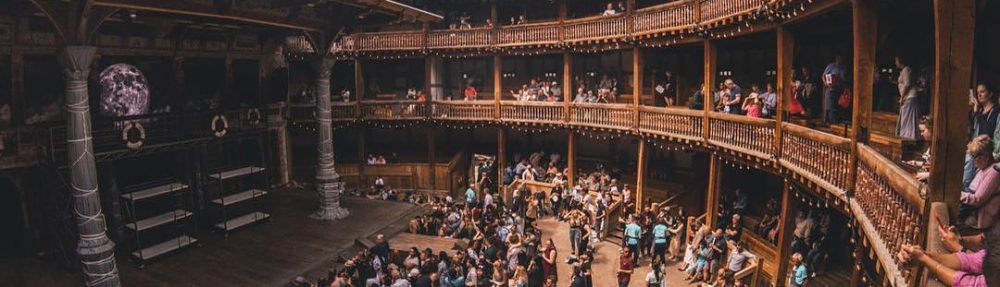
- (this) wooden O – usually taken as a reference to the Globe Theater, but may have been the Curtain Theater where Shakespeare’s company acted prior to the opening of the Globe in 1599
Special character vocabulary
Hostess Quickly
Mistress Quickly frequently uses “malapropisms”, or words which sound like the intended words, but have very different and often humorous unintended meanings. Here are some of the words she uses, followed by what she probably meant to say:
- adultery/ assault and battery
- Arthur’s bosom/ Abraham’s bosom (meaning together with Abraham in heaven)
- quotidian tertian/ “quotidian” is a fever that strikes every day; “tertian” only every other day. Typically, she doesn’t know which is which.
MacMorris
- beseech’d – besieged (attacked)
- By Chrish – by Christ
- ish – is
- ish give over – is given up
- law – la (a meaningless syllable to add emphasis)
- so God sa’ me – so God save me (I swear)
- tish – it is
Jamy
- ay’ll – I’ll
- bath – both
- (that is the breff) and the long – brief and the long (no more needs to be said)
- (By the) mess – mass (I swear)
- de – do
- feith – faith
- gud – good
- leve – leave (permission)
- lig i’ th’ grund – lie in the ground
- quit – leave, abandon
- sall – shall
- slomber – slumber (sleep)
- suerly – surely
- theise – these
- tway – two
- vary – very
- wad full fain – would much rather
Pistol
- bedlam – crazy
- ferret – strangle, choke
- firk – beat
- spital – hospital
Katharine and Alice
- dat – that
- de – the
- den – then
- sall – shall
- wat – what
Fluellen
- athversary – adversary (enemy)
- aunchient – 1. ancient 2. ensign or lieutenant
- by Cheshu – by Jesus
- digt – dug
- doo’s – does
- fain – wish to
- falorous – valorous (brave)
- fewer – more quietly
- Jeshu – Jesus
- offer’t – offered
- ‘orld – world
- pear – bear
- petter – better
- pig – big
- plack – black
- pless – bless
- plood – blood
- plow – blow
- plue – blue
- pody – body
- porn – born
- poys – boys
- pragging – bragging
- prains – brains
- prave – brave
- prawls – brawls
- pread – bread
- pridge – bridge
- prings – brings
- silling – shilling (money)
- scald – scabby
- voutsafe – vouchsafe (promise)
Summary
ACT ONE
Prologue
The Narrator asks for the audience to use its imagination to pretend that the “wooden O” of the theater is actually the royal courts and battlefields of England and France, and that the small cast can represent the thousands of men in those armies.
scene 1
Two bishops consider how Prince Hal, who was so wild in his youth, has settled down and taken on his royal responsibilities now that he has become King Henry. Now they are called upon to decide an important matter of historical law: whether the king goes to war against France will depend upon it, and if he does, it will be to the benefit of the bishops themselves.
scene 2
The king asks the bishops to determine whether he can make a legitimate claim to the throne of France; after much debate, they decide that he can. He then makes plans to challenge the French king for it. However, the Dauphin, who thinks he is still the undisciplined youth who routinely got into trouble with Sir John Falstaff, sends an insulting present in response: a chest full of tennis balls. Enraged now, Henry proceeds with his plans to invade France.
ACT TWO
Prologue
The Chorus explains that the people are excited about going to war with France, but that three noblemen are thinking of betraying Henry to the French and killing him for gold.
scene 1
Falstaff’s followers Bardolph and Pistol prepare to go off to war. Pistol has married Hostess Quickly, earning the jealousy of Nym who was in love with her, but Bardolph makes peace between them. They discuss Falstaff, who has been on his deathbed since Henry publicly embarrassed him at his coronation (at the end of Henry IV pt. 2)
scene 2
Henry, warned ahead of time about the three traitors, calls them together and pretends he trusts them. He tells them about an imaginary prisoner whom he planned to show mercy toward, but all three advise him against it. In fact, it was a trap; just like they refused to show mercy in that case, he has no mercy on them when he reveals that he knows all about their plans to betray him.
scene 3
Hostess Quickly reveals to the others how Falstaff died. Sadly, they say goodbye and head for France.
scene 4
The French king and his son prepare for the invasion. None of the French think Henry is much of a threat, although the Constable warns them that he has changed since his days running around with Falstaff. Exeter arrives, bringing a warning from Henry that he will bring war to France. He also reminds the Dauphin of his mocking present of tennis balls, saying that is another reason that Henry is resorting to war.
ACT THREE
Prologue
Chorus explains that Henry takes his army across the English Channel and begins his attack, in a place called Harflew (Harfleur).
scene 1
Henry encourages his soldiers to fight harder against the city of Harflew. His words “Once more unto the breach, dear friends” and “Cry ‘God for Harry (Henry’s nickname), England, and Saint George!'” are among Shakespeare’s most famous lines.
scene 2
Bardolph, Nym and Pistol complain about the dangers and hardship of war. The Boy observes to the audience that all three of them are much less brave than they pretend to be.
Three of Henry’s officers, MacMorris, Jamy and Fluellen, discuss the siege of Harflew. Each has a different opinion, and they almost start fighting among themselves.
scene 3
Henry gives the town of Harflew one last chance to surrender, or else he will have no mercy on them when he takes it by force. Having been told by the Dauphin that no help is on the way, they open the gates. With winter coming, and many of his men falling sick, Henry decides to stop attacking until spring.
scene 4
The daughter of the French king, perhaps knowing that she is going to be offered in marriage to the English king, asks her maid for a quick English lesson.
scene 5
The King, Dauphin and court lament at how the “barbarous” English are loose on French soil. The King commands his armies to repulse them, and bring Henry back alive.
scene 6
Pistol’s friend Bardolph is to be hanged for looting, so Pistol asks Fluellen to intercede with the Duke of Exeter on his behalf. When Fluellen refuses, Pistol insults him. Henry confirms the sentence, even when he learns that it is his old friend Bardolph who is to be hanged, since he had given orders that his soldiers were not to steal from the French or abuse them in any way.
Montjoy brings the French King’s demand for Henry to pay the French back for the damage he has caused, but Henry defies him. He even tells the French that his men are sick and returning to Calais, daring them to attack him.
scene 7
While waiting for daylight so they can fight the English, the French court discuss their horses and place wagers on who will kill the most the next day. They joke that the Dauphin is not as great a soldier as he pretends to be, but convince themselves that Henry fears the coming day as much as they anticipate it.
ACT FOUR
Prologue
The Narrator describes the preparations for the battle, in a field near the castle of Agincourt.
scene 1
Henry disguises himself and walks among the common soldiers. Pistol, thinking he is Welsh, tells him to remind Fluellen of his quarrel, and actually insults the king himself. However, Henry does nothing to him, not even revealing to his former friend who he really is.
Fluellen argues with Gower that he should speak more quietly in camp, because that’s how the Romans did it.
Henry now takes part in a debate with three soldiers over whether it is just to die following the king’s orders. Another soldier, Williams, insults Henry, not knowing who he is, and this time Henry gives the man his glove, promising to fight him the next time they see each other.
scene 2
The French rejoice that the day has begun, and continue to boast about how they will slaughter the English, who are out-numbered five to one.
scene 3
In response to Westmoreland’s wish that some of the men currently safe in England could be with them in France to make the numbers more even, Henry instead predicts that after their victory today, the men in England will be jealous that they didn’t take part in it. Years from now, Henry (correctly!) prophesies, the men who won this amazing victory will be treated as heroes every year on the anniversary of the battle, and everyone else will wish that they had been at Agincourt, rather than safe in bed at home.
Montjoy again gives Henry one last chance to surrender, which Henry spurns. Henry (again, correctly) predicts that Montjoy will appear before him one more time.
scene 4
Pistol secures the surrender of a French gentlemen who, fortunately for Pistol, is even more of a coward than Pistol is. With the Boy translating, he secures a huge ransom.
In ominous foreshadowing, the Boy reveals that the camp is guarded only by servants, who would be no match should the French decide to attack.
scene 5
The French reveal that their boasts of an easy victory over the English have come to nothing, and they are losing the fight in a lopsided upset. They discuss alternatives such as suicide, or returning to the battle to die honorably.
scene 6
Although the battle is going well, Henry is sufficiently concerned when he sees the French rally their troops that he orders his men to kill all of their prisoners in cold blood rather than risk being caught between a prisoner insurrection and the French counter-offensive.
scene 7
Fluellen and Gower find the camp ransacked by fleeing French troops, and all the servants murdered. Henry is enraged at the sight, and orders the French, cowering on the horizon, either to face him in battle or leave the battlefield. Instead Montjoy approaches him again, as Henry predicted, with the French offer to surrender.
The king sees Williams, and remembering his challenge the night before, decides to play a cruel joke on Fluellen. He gives the glove to Fluellen, and then sends him where Williams can see him. He also tells Fluellen that the glove belonged to an enemy named Allençon.
scene 8
When Williams sees the glove, he strikes Fluellen, thinking he was the man he argued with at the campfire. Fluellen tries to arrest him, thinking him a friend of Allençon. Then the king arrives, explains everything, and rewards Williams for being as good as his word.
Henry learns that the victory was even better than he hoped: for all the thousands of French dead and captured, only about thirty English soldiers died altogether. It was one of the most lopsided victories in history.
ACT FIVE
Prologue
England erupted into celebration to have the victorious army back, but Henry had to return to France to settle the treaty.
scene 1
Fluellen gets revenge on the cowardly Pistol by forcing him to eat the leek Fluellen proudly wears in his cap, and beating him when he refuses. Ever the liar, Pistol decides that when he returns to England, he’ll tell everyone that he got the wounds fighting the French.
scene 2
Guided by the firm hand of the queen of France, the treaty negotiations go well. When he gets alone with Katharine, he wins her love in a combination of English and French.
Epilogue
Chorus begs the audience’s indulgence for the author’s inability to tell the story well, and reminds them that Shakespeare had told the story of Henry’s son, how the French lands were won back by the French, in his trilogy Henry VI. This is written in sonnet form.
Selected biography from Encyclopedia Britannica
www.britannica.com/eb/ article?eu=41679&tocid=0&query=raphael
Holinshed, Raphael (d. c. 1580), English chronicler, remembered chiefly because his Chronicles enjoyed great popularity and became a quarry for many Elizabethan dramatists, especially Shakespeare, who found, in the second edition, material for Macbeth, King Lear, Cymbeline, and many of his historical plays.
Holinshed probably belonged to a Cheshire family. From roughly 1560 he lived in London, where he was employed as a translator by Reginald Wolfe, who was preparing a universal history. After Wolfe’s death in 1573 the scope of the work was abridged, and it appeared, with many illustrations, as the Chronicles of England, Scotlande, and Irelande, 2 vol. (dated 1577).
The Chronicles was compiled largely uncritically from many sources of varying degrees of trustworthiness. The texts of the first and second (1587) editions were expurgated by order of the Privy Council, and the excisions from the second edition were published separately in 1723. An edition of the complete, unexpurgated text of 1587, edited by Henry Ellis and titled Holinshed’s Chronicles of England, Scotland, and Ireland, was published in six volumes (1807-08). Two selections have also appeared: Holinshed’s Chronicle as Used in Shakespeare’s Plays was edited by Allardyce and Josephine Nicoll (1927), and Shakespeare’s Holinshed was compiled and edited by Richard Hosley (1968).
the following articles courtesy of Microsoft Encarta
Henry V (of England) (1387-1422), king of England (1413-22), known for his victorious campaigns against France, born at Monmouth in August or September 1387. He was the son and successor of Henry IV. In 1403 Henry led the royal army that defeated the rebellious Percy family, led by Sir Henry Percy, at Shrewsbury. He also commanded the English forces that put down the revolt of the Welsh chief Owen Glendower. In 1410-11, when his father was incapacitated by illness, Henry headed the royal council, but was removed after a political quarrel with his father. On succeeding to the throne in 1413 Henry V restored Sir Henry Percy’s son to his lands and titles; he also honorably reburied at Westminster Abbey the remains of Richard II, who had been deposed by Henry IV and had died in prison during the latter’s reign. The new king continued his father’s policy in persecuting the religious sect known as the Lollards and executed their leader, Sir John Oldcastle, in 1417.
In 1415 Henry warred against France, winning in that same year the Battle of Agincourt. The following year he allied himself with the Holy Roman emperor Sigismund, and in 1417 he began the conquest of Normandy (Normandie), completing it with the capture of Rouen two years later. He concluded a peace treaty with Charles VI of France at Troyes in 1420, obtaining Charles’s daughter, Catherine of Valois, in marriage and securing the promise of succession to the French throne on the death of Charles. When Henry returned to England in 1421, leaving his brother Thomas, duke of Clarence, as governor of Normandy, the French rose in opposition to English rule and defeated the duke. Henry returned to France for a third campaign, but he became ill and died. He was the most influential ruler in western Europe at the time of his death in Vincennes, France, August 31, 1422. He was succeeded by his son Henry VI.
Agincourt, Battle of, military engagement during the Hundred Years’ War, fought in France on October 25, 1415, between an English army under King Henry V of England and a French one under Charles d’Albret, constable of France. Prior to the action, which took place in a narrow valley near the village of Agincourt Henry, a claimant to the French throne, had invaded France and seized the port of Harfleur. At the time of the action, Henry’s army, weakened by disease and hunger, was en route to Calais, from which Henry planned to embark for England. In the course of the march to Calais the English force, which numbered about 6000 men, for the most part lightly equipped archers, was intercepted by d’Albret, whose army of about 25,000 men consisted chiefly of armored cavalry and infantry contingents. The English king, fearful of annihilation, sought a truce with the French, but his terms were rejected. In the battle, which was preceded by heavy rains, the French troops were at a disadvantage because of their weighty armor, the narrowness of the battleground, the muddy terrain, and the faulty tactics of their superiors, notably in using massed formations against a mobile enemy. The French cavalry, which occupied frontal positions, quickly became mired in the mud, making easy targets for the English archers. After routing the enemy cavalry, the English troops, wielding hatchets, billhooks (a type of knife), and swords, launched successive assaults on the French infantry. Demoralized by the fate of their cavalry and severely hampered by the mud, the French foot soldiers were completely overwhelmed. D’Albret, several dukes and counts, and about 500 other members of the French nobility were killed; other French casualties totaled about 5000. English losses numbered fewer than 200 men. French feudal military strategy, traditionally based on the employment of heavily armored troops and cavalry, was completely discredited by Henry’s victory. Although Henry returned to England after Agincourt, his triumph paved the way for English domination of most of France until the middle of the 15th century.
Contributed By: Sidney R. Packard
The Hundred Years’ War, armed conflict between France and England during the years from 1337 to 1453. The Hundred Years’ War was a series of short conflicts, broken intermittently by a number of truces and peace treaties. It resulted from disputes between the ruling families of the two countries, the French Capetians and the English Plantagenets, over territories in France and the succession to the French throne.
II ROOTS OF THE CONFLICT
The conflict stemmed from the fact that successive kings of England, beginning with William I in 1066, had controlled large areas of France as fiefs, lands they held in exchange for service and loyalty to the king of France. By the time King Edward I of England died in 1307, few of these French territories remained in English hands. The most important of these remaining few was Gascony, a valuable wine-producing region in the southwestern part of France. However, the French kept trying to extend their jurisdiction in this region, and the two countries had often fought small skirmishes over control of Gascony. The situation between the two countries grew more complicated in 1308 when Edward I’s son Edward II of England married the daughter of King Philip IV of France. Their son, Edward III, thus had a claim to the French throne when Philip IV’s last son died in 1328 without a male heir.
However, the French nobles were unwilling to consider Edward III as their king. They declared that the French crown could pass only to a man whose claim to the throne was through his male ancestors. Thus Philip VI, a nephew of Philip IV, became king in 1328. Though Edward III did not challenge this decision at the time, he never renounced his claim to the French throne, and he reasserted it more forcefully when hostilities with France began.
The Hundred Years’ War involved three major conflicts: the Edwardian war (1340-1360), dominated by Edward III of England; the Caroline war (1369-1389), dominated by Charles V of France and his gifted military commanders; and the Lancastrian war (1415-1435), dominated by Henry V of England and his brother John, the duke of Bedford.
III THE EDWARDIAN WAR (1340-1360)
The Edwardian war was a great English success. The English were able to put together a strong, well-financed army. In addition, the use of the English longbow against French forces enabled the English to win many important victories. By the end of the Edwardian war, the English had taken control of much of southwestern France, as well as the important northern city of Calais.
A Opposing Forces
Though England was smaller and poorer than France, it had more highly developed governing institutions, including a system of regular taxation. In France before the late 1350s, the king could levy taxes only by long negotiations at a local level, and Frenchmen stubbornly resisted paying anything when war was not actually in progress. Frequently short of money, the French found their advantages over England in wealth and population at the start of the war negated by inadequate financial institutions.
The English still faced challenges, however, as they had to fight on French soil. It was very complicated and expensive to transport an army of heavily-armored knights to France, and so the English found it much cheaper to send mainly infantrymen and foot soldiers. As a result, their armies were much smaller and contained fewer powerful horse-mounted cavalry than did those of the French.
However, the English compensated for their lack of cavalry by arming their infantry with the longbow, a powerful weapon that could fire an arrow both quickly and accurately. The longbow could penetrate knights’ chain mail, even when shot from a substantial distance. It enabled the English archers to destroy French cavalry charges. Consequently the English, even when outnumbered, usually won the pitched battles.
Hostilities began on May 24, 1337, when Philip VI invaded the English-held region of Gascony in southwestern France. In retaliation, Edward III reaffirmed his claim to the French throne and invaded France from the north. The English won command of the sea in June 1340 when they destroyed a French fleet off Sluis in the Netherlands. They were thus able to control the English Channel and prevent French forces from invading the English islands.
B Major Battles
The English conducted three major campaigns between 1345 and 1360. The first campaign was highlighted by three English victories, including the Battle of Crécy in Normandy (Normandie) in 1346. During the battles of this campaign, the English inflicted heavy losses on the French, and Edward III concluded the campaign by taking the important French port of Calais in 1347.
The next campaign began in the southwest of France, where Edward III’s son, Edward the Black Prince of Wales, conducted a very damaging raid in 1355. In 1356 the Black Prince marched his forces northward until the new French king, John II, cornered him near Poitiers in western France in September. There, however, the Black Prince defeated the French decisively, taking John II prisoner. John spent four years in captivity trying to arrange his ransom and to buy his release with generous treaties. Despite the fact that they were unable to finance an army, the government in France rejected the treaties negotiated in London. Edward III’s final campaign in 1359 was unopposed by the French. It ended with the Peace of Brétigny in 1360 that forced the French to cede all of the southwestern region of Aquitaine to the English, and left thousands of unemployed soldiers ravaging the French countryside.
IV THE CAROLINE WAR (1369-1389)
The Caroline war was characterized by a dramatic French resurgence. Major reorganization of French forces by King Charles V (1364-1380), including the establishment of a standing army, enabled the French to quickly regain much of the territory that they had lost to the English in the Edwardian war. Although political turmoil prevented the French from achieving a total victory, they were able to reduce English possessions in France to a few coastal cities.
A French Successes
French successes in the Caroline war were due in large part to the skills of two men that the new French king, Charles V, found to lead his armies. One of them, Bertrand du Guesclin, a noble from Bretagne, was highly skilled in conducting small hit-and-run raids and was able to control the unruly soldiers of the period. The other, Olivier de Clisson, was a nobleman who had fought on the English side during the Edwardian war. He returned to the French side and gave Charles V the benefit of his knowledge of English tactics. Du Guesclin became Constable of France (head of the army) in 1370, and when he died in 1380, Clisson succeeded him.
Charles also reorganized the French military, developing a full-time, professional army for the first time, and established a regular system of taxation to pay for it. In addition, France gained an important ally on the throne of the Spanish kingdom of Castile, Henry II, who had pledged support for Charles V.
When the Caroline war began in 1369, the English found themselves at a disadvantage. Edward III of England was getting old, and the Black Prince was in the early stages of a terminal illness. French troops under Du Guesclin and Clisson gradually were able to reconquer western France, using hit-and-run tactics and avoiding major pitched battles. The French cause was helped when a largely Castilian fleet defeated the English navy in 1372 off La Rochelle in western France. The French had also been rebuilding their own fleet, and in the summer of 1377 they launched an offensive that left the English in control of only a few coastal cities in the northwest of France. The French and Castilian navies took command of the English Channel and attacked the southern English coast. Under threat of invasion, the English were forced onto the defensive.
B Domestic Turmoil However, the untimely death in 1380 of Charles V brought French advancement to a halt. Charles’s heir, Charles VI (1380-1422), was only 11 years old, and his inability to take power immediately led to the development of rival factions at court. One faction was led by Charles VI’s uncle Philip the Bold, duke of Bourgogne. The other, called the Marmousets, included Charles V’s former officials and military commanders and was led by the Constable of France, Olivier de Clisson. The French planned major invasions of England in 1385 and 1386, and a lesser raid in 1387. However, a combination of bad weather andinternal political conflict prevented these campaigns, and the Caroline war finally ended in 1389 with the first of several long truces.
Shortly after the truce was signed, a series of crises destabilized the governments of both England and France, gradually undermining the peace. In August 1392, Charles VI had a sudden attack of mental illness, which would afflict him off and on for the rest of his life. Philip the Bold immediately seized power and ousted Clisson and the Marmousets. Under Philip’s leadership, a new and longer truce was made with England in 1396, when English king Richard II married the daughter of Charles VI. Then, in 1399, Richard II, who was the key to peace between the English and the French, was overthrown by his cousin, Henry IV, of the Lancastrian branch of the Plantagenet family. Finally, in 1404, the able and diplomatic Philip the Bold died and was succeeded by his brutal and unpopular son, John the Fearless, as ruler of Bourgogne. In 1407 John the Fearless had the king’s brother murdered, and France plunged into civil war. John occupied Paris in 1418, but one year later he was murdered by forces loyal to the king.
V THE LANCASTRIAN WAR (1415-1435) The Lancastrian war was originally a success for the English. Aided by an alliance with the duke of the French region of Bourgogne, the English quickly captured much of northern and western France, taking Paris in 1420. English expansion, though checked in 1429, was not reversed until the duke of Bourgogne changed his allegiance back to the French in 1435, leaving English forces seriously overextended. After this, the French quickly regained lost territory.
A English Resurgence
The turmoil generated by John the Fearless left France highly vulnerable to attack, and King Henry V of England inaugurated the Lancastrian war by invading France in 1415. A large French force trapped Henry’s troops in October near Agincourt in northern France. Though Henry’s forces were severely outnumbered, the English archers and foot soldiers held their ground against the French heavy cavalry. The French, who no longer had leaders like Clisson who understood English tactics, reverted to their traditional cavalry charge and were easy targets for English arrows. The French suffered a defeat that approached a massacre at the Battle of Agincourt.
In 1417 Henry began the methodical conquest of Normandy and other parts of northwestern France. He met little resistance since many of the noblemen of Normandy had died in the massacre at Agincourt. Henry was aided by the forces of Philip the Good, the son of John the Fearless of Bourgogne. Philip sided with the advancing English after his father was murdered by forces loyal to the French king. In 1420 the French government was forced to sign the Treaty of Troyes, which disinherited the dauphin (the French heir to the throne), gave his sister Catherine to Henry V in marriage, and declared Henry the heir of Charles VI. Philip the Good accompanied the English king into Paris. In 1421 Henry and Catherine had a son, Henry VI. Like Edward III before him, he was the grandson of two kings but owed his French royal blood to his mother.
The Treaty of Troyes did not end the Lancastrian War, for much of central and southern France did not accept it; they supported the dauphin, who became Charles VII in 1422. Though still young, Henry V of England died in 1422, and Charles VI followed a few months later. The infant Henry VI was officially the king of both countries, and his uncle John, duke of Bedford, continued the English war effort in France, with the much-needed support of Philip the Good of Bourgogne. In 1424 the duke of Bedford defeated the French in battle at Verneuil, and in 1428 he besieged Orléans, an important city in central France.
B Joan of Arc Early in 1429 there appeared before Charles VII a most unusual and unexpected visitor—a 17-year-old peasant girl, dressed in men’s clothing. This young woman claimed to have had visions of saints who told her that she was to lead a French army against the English besieging Orléans. Though hesitant to accept this offer, Charles finally agreed and sent a relief expedition that successfully broke the siege. The young heroine, known to history as Saint Joan of Arc, followed this success with another victory over the English at Patay, and then led Charles to Reims, deep in enemy-held territory, where he was crowned king of France.
However, despite the dramatic French victories under Joan of Arc, they were merely a brief episode in which the French made limited gains. Joan was eventually captured by the Bourguignons, turned over to the English, and executed in 1431.
VI THE END OF THE WAR In 1435, after lengthy peace negotiations with Charles VII, Philip the Good of Bourgogne abandoned his support of the English. Without the support of Philip’s forces, the English were unable to adequately hold their territory, and the tide of the war turned in favor of France, and the French regained Paris in 1436.
In addition, the French revived the stable coinage, regular taxes, and the standing army that had originated under Charles V but had disappeared during his son’s insanity. France also acquired superiority in the use of firearms, especially field artillery.These large, mobile cannons were capable of inflicting heavy damage, and they gave the French the same sort of military advantage that the longbow had given the English in the previous century.
In 1444 French conquests forced the English to agree to a truce. When that truce expired five years later, the remaining English possessions in France quickly fell into French hands. Artillery decided both the battle of Formigny (1450), which determined the fate of Normandy, and the battle of Castillon (1453), which ended English rule in Aquitaine. The battle of Castillon marked the end of the Hundred Years’ War. The English retained Calais in the far north until 1558, but were never again able to mount a serious threat to France.
The end of the Hundred Years’ War was also the end of a long period of economic trouble and declining population in both countries, to which the war had contributed. In France, the war encouraged the emergence of centralized governing institutions. In England, the loss of French territory forced the government to focus on domestic issues. By the end of the war both the French and English peoples began to view themselves as separate and distinctive nationalities, and not merely as members of a feudal empire.
Contributed By: John Bell Henneman
 Shakespeare-sama, Tokyo