King Richard II is possibly the most unappreciated figure in British history, and the play bearing his name one of the most underrated of Shakespeare’s plays. Certainly as a historical figure he deserves special attention. Thrust onto the throne as a boy, he exercised his powers from a young age, notably while still in his teens suppressing the Peasants’ Revolt led by Wat Tyler in 1381. Later, he shook off the restrictions placed upon him by his uncles John of Gaunt and Thomas of Woodstock to vest the powers of royalty entirely unto himself. Geoffrey Chaucer, after Shakespeare himself the greatest poet in English literature, worked as a diplomat and a customs official in his time.
Recognizing that wars, and the taxes necessary to finance them, were unpopular enough to cause citizens to overthrow governments, Richard moved to end the Hundred Years’ War with France (unsuccessfully, of course. That war would still be a factor in the reign of Henry VI, the grandson of his successor.) And of course, he unwittingly became the catalyst for the most divisive civil war of all — which we know today as the War of the Roses.
Perhaps the single most significant aspect of Richard’s reign was his insistence upon the royal prerogative: the idea that kings are chosen by God, and must be obeyed completely. This was a period in which both nobles such as the lords at Runnymeade, and peasants represented by Wat Tyler, attempted to wrest greater authority through Parliament and local governments from the royalty. Once he reached adulthood, Richard devoted himself to reversing this trend, and for many years succeeded. In the end, he overreached, depending on the people to support his removal of more popular rivals for power, and paid for it with his life. Shakespeare’s play chronicles this ultimate failure.
As with all plays related to the War of the Roses, it’s necessary to discuss the traditional rules for royal succession:
In a nutshell, Richard II became king because he was the eldest son of Edward the Black Prince, who was the eldest son of the previous king, Edward II. Richard II, who had no son of his own, had appointed his twice-removed cousin Edmund Earl of March to be his successor, on the grounds that Edmund was descended from the third son of Edward II, and so was arguably the next in line. By the logic of this custom, called primogeniture, Henry IV had no right to seize power, since he was the son of John of Gaunt, the fourth son of Edward II.
In the days before surnames were common, many nobles were known by their place of birth. Hence the king’s uncle who was born in Gant (today Ghent in Belgium) was “John of Gaunt”. His son born in Bolingbroke (sometimes spelled Bullingbrook) was Henry Bolingbroke.
Also, many characters are known also by their titles. John of Gaunt is the Duke of Lancaster. His son Henry Bolingbroke was the Duke of Hereford, and his brother Edmund was the Duke of York. Edmund’s son Edward, who would one day be the Duke of York himself, was Duke of Albermarle (Aumerle).
One last note on the names: in order to match the rhythm of the poetry (an important consideration for Shakespeare) the name Aumerle is pronounced [oh-MURL] or [aw-MERL].
Shakespeare was of course a dramatist, not a historian, so we can’t fault him for factual discrepancies. This is especially noticeable with the female characters of Richard’s queen and the Duchess of York. Richard’s first wife was Anne of Bohemia, who died in 1394. For political reasons he then married Isabella of Valois, who was still a child during the events depicted in the play. Likewise Aumerle’s mother, Infanta Isabella of Castile, died in 1392, and York remarried Joan Holland, who had no children of her own.
Also, Richard and Bolingbroke were the same age, both born in 1367. Shakespeare depicted young ‘Hotspur’ (who was to feature in a later history play) as little more than a boy, although he was actually two years older than Richard and Bolingbroke.
On the other hand, it’s striking how many details Shakespeare got right. Bolingbroke’s uncle Gloucester, or Thomas of Woodstock, was imprisoned and killed, probably by Mowbray and almost certainly on the king’s orders. Henry and Mowbray’s duel was interrupted by the king, who exiled them both. Henry returned while the king was fighting Irish wars, and gathered the support of sympathetic nobles, including Northumberland and his son Henry ‘Hotspur’ Percy. At first he claimed he only wanted back his title as Duke of Lancaster, but when the opportunity arose to seize the crown, he took it.
Like many Shakespeare plays, it’s impossible to date the writing of Richard II with any degree of certainty. Sir Robert Cecil received an invitation to a specially-commissioned private performance of it by Shakespeare’s company on December 9, 1595 at a friend’s house. Therefore the play must have been written before that time. It was first published in 1597, and reprinted frequently over the next decade, although notably with the omission of the scene in which Richard is deposed. While no one accuses Elizabeth herself of censorship, it is certainly understandable that a monarch without an heir like Elizabeth I would feel threatened by the parallels of her own life with Richard’s. Likewise, the wish of those in her government to suppress the idea of removing a monarch by force is understandable, and the deposition scene was only included with the Fourth Quarto in 1608, after Elizabeth’s death.
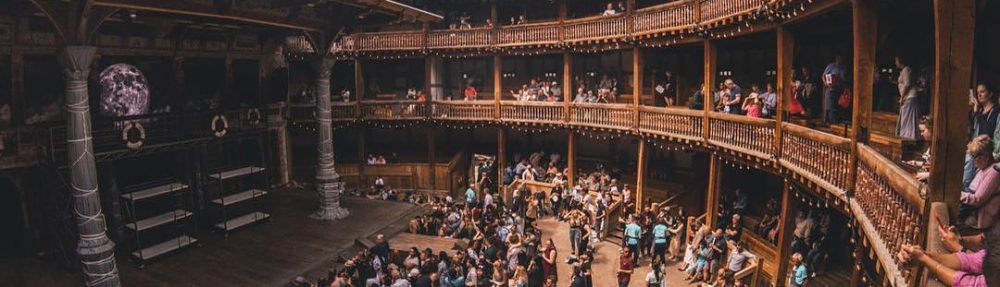
This suspicion may have been justified. On 7 February 1601, supporters of the Queen’s former favorite, the Earl of Essex, commissioned a special performance of Richard II at the Globe Theatre just before initiating armed rebellion against the queen. It seems likely that the conspirators were hoping that the play would rally the citizens to their cause, and help bring about the end of Elizabeth’s reign. Shakespeare and his fellow actors were required to testify later that they were not part of the conspiracy, but merely players for hire. The queen believed them, and they remained her entertainment of choice. Essex and his followers were not so lucky, and were executed. Shortly thereafter, the aging queen noted the parallels between the two monarchs, quipping “I am Richard II. Know ye not that?”
I am often amused by this trend that pops up throughout the War of the Roses:
- A weak king named Richard (II) was deposed by a strong claimant named Henry (IV).
- A weak king named Henry (VI) was deposed by a strong claimant named Richard (Plantagenet, Duke of York).
- A weak king named Richard (III) was deposed by a strong claimant named Henry (Tudor, later Henry VII).
Scene summary:
ACT I
scene i
Henry Bolingbroke accuses Mowbray of treason, and challenges him to a duel. The king and Gaunt (Henry’s father, the king’s right-hand man) try to get them to change their minds.
scene ii
Among other things, Henry blames Mowbray for killing Gloucester, the king‘s uncle. Gloucester’s wife wants Gaunt, Gloucester’s brother, to get revenge, but Gaunt won’t do it, so the wife plans to kill herself.
scene iii
Henry and Mowbray get ready to fight their duel, but at the last minute the king stops them. He banishes Henry from England for six years, but Mowbray for life.
scene iv
The king plans a war in Ireland, and he will levy a stiff tax on the wealthy to pay for it. He hears that Gaunt is sick, and plans to take all of Gaunt’s money after he dies.
ACT II
scene i
The king visits Gaunt before he dies. Gaunt warns the king about destroying the royal family. After he dies, the king takes his money and goes to Ireland to lead the war, leaving York to run things in England until he returns. Some friends of Gaunt talk about what a bad thing the king did.
News comes that Henry is coming back to England too early, and leading an army.
scene ii
The queen is sad because Richard has gone to the Irish wars. She learns that Henry is back in England with an army.
Because of the heavy taxes, she fears that the common people will revolt against the king.
scene iii
Henry and his forces meet his uncle York, who tries to shame him for returning to England. All he wants back is his name Lancaster: the title that Richard stole from Gaunt. He meets young Henry Percy, who will later be known as Hotspur.
scene iv
Salisbury can’t persuade the Welsh army to stay on Richard’s side.
ACT III
scene i
Bushy and Green are captured and brought before Henry. He sends them to be executed for telling lies to King Richard.
scene ii
Richard returns to England, proudly claiming that he can’t lose because God is on his side. Then he learns that the Welsh army doesn’t support him anymore, and he loses all his confidence.
scene iii
Richard surrenders to Henry, and considers becoming a priest instead.
scene iv
The queen overhears the gardener talking about England. Symbolically, he compares King Richard to a gardener who has done a bad job taking care of his garden.
ACT IV
scene i
Bagot accuses Aumerle of plotting against Henry and of bragging that he was responsible for Gloucester’s death. Aumerle challenges him to a duel. Fitzwater says Aumerle is lying. Surrey says Fitzwater is lying.
York announces that Richard is making Henry the new king, but the Bishop of Carlisle says Henry can’t be king because he is a traitor.
Richard gives up his crown to Henry. Aumerle and Carlisle plot against the new king.
ACT V
scene i
Richard says goodbye to his queen. He goes to prison and she goes into exile in France.
scene ii
York finds out that his son Aumerle was plotting against King Henry. York rides to court to accuse his son of treason, while Aumerle and his mother ride to ask forgiveness.
scene iii
Aumerle gets to court first, and asks the king for forgiveness. York arrives next, and accuses him of treason. Then the mother arrives, and Henry must decide between the three conflicting voices. Finally he agrees to forgive Aumerle.
scene iv
Exton gets the idea that Henry wants him to kill Richard in prison. scene v
In prison Richard is feeling sorry for himself. Exton tries to poison him, then attacks and kills him.
scene vi
Exton shows the body of Richard to King Henry. He’s not happy that Exton killed him, and decides to atone for the crime by going on a pilgrimage to Jerusalem.
The following is historical information about Richard, courtesy of Encarta.
Richard II (1367-1400), king of England (1377-99), whose reign was marked by national disunity and civil strife.
A younger son of Edward, Prince of Wales (the Black Prince), and Joan, called the Fair Maid of Kent, Richard was born January 6, 1367, in Bordeaux, France. He was created Prince of Wales in 1376, the year of his father’s death, and was placed in the care of his uncle John of Gaunt, duke of Lancaster. In 1377, on the death of his grandfather, King Edward III, Richard became ruler of England, then a country devastated by plague and oppressed by heavy taxes, the result of a war with France. Parliament, which had obtained greater power in the last years of Edward III’s reign, now sought to secure control of the government, but was opposed by John of Gaunt and his followers. The speedy suppression of Tyler’s Rebellion in 1381 was largely the result of Richard’s courage and daring. A year later, at the age of 15, Richard married Anne of Bohemia, daughter of the Holy Roman emperor Charles IV, and began to seek the downfall of the great nobles who controlled Parliament and prevented him from acting independently. Led by Richard’s uncle Thomas of Woodstock, duke of Gloucester, in 1388 a coterie of noblemen known in history as the lords appellant “appealed” or accused Richard’s adherents of treason, banishing some and having others executed. The following year Richard, with the help of John of Gaunt, succeeded in asserting his authority.
Trying to reestablish English authority in Ireland, Richard led an expedition to the country in 1394; that same year his queen died. In 1396 a marriage treaty was concluded between Richard and a French princess, Isabella. In 1397 Richard had Gloucester arrested and imprisoned at Calais, where he died, perhaps murdered. He also exiled John of Gaunt’s son, Henry Bolingbroke, duke of Hereford, who later became Richard’s successor as Henry IV, and executed or banished others of the lords appellant. On his return from a second military expedition to Ireland in 1399 Richard found that Bolingbroke had returned from exile and placed himself at the head of a formidable army. Richard was captured by Bolingbroke in Wales and brought captive to London, where on September 30, 1399, he formally resigned his crown. On the following day his abdication was ratified by Parliament, which then confirmed Bolingbroke as King Henry IV. Richard was secretly confined in Pontefract Castle, where he either died of starvation or was murdered in February 1400.
 Shakespeare-sama, Tokyo